
Recognizing When a Business Needs Additional Fire Protection
Fire safety is an essential consideration for businesses operating commercial buildings, warehouses, manufacturing facilities, and construction sites. Fire watch security guards provide on-site monitoring when temporary fire risks, equipment impairments, or hazardous activities require additional attention. Their presence helps businesses identify developing hazards, report unsafe conditions, and follow established emergency procedures. Understanding when this type of coverage may be necessary allows business owners to prepare appropriate safeguards before a temporary problem affects employees, visitors, property, or daily operations.
Businesses may need additional fire monitoring when their normal protection arrangements cannot provide the expected level of coverage. Examples include malfunctioning alarm systems, sprinkler maintenance, welding projects, renovations, and temporary changes to building operations. The specific response depends on the circumstances, applicable regulations, and instructions from the relevant fire authority. By identifying the reason for coverage early, managers can establish suitable monitoring procedures, communicate responsibilities, and determine how long additional oversight should remain in place.
Responding to Fire Alarm and Sprinkler System Failures
Fire alarm and sprinkler systems play important roles in detecting fires and controlling their spread. When these systems become impaired because of maintenance, mechanical failure, accidental damage, or planned upgrades, a property may temporarily lose part of its normal protection. Business owners should follow the applicable impairment procedures, notify the appropriate parties when required, and determine whether temporary monitoring or other protective measures are necessary. Prompt action helps prevent an equipment problem from becoming an unmanaged safety concern.
On-site fire watch arrangements should reflect the location and seriousness of the impairment. For example, a malfunction affecting one section of a large commercial building may require different precautions from a failure involving an entire facility. Managers should identify affected areas, explain access restrictions, establish communication procedures, and coordinate repairs with qualified technicians. Monitoring should continue for the period required by applicable rules and the approved safety plan. Once the system has been restored, responsible personnel should verify its operational status and complete required notifications before ending temporary coverage.
Managing Fire Risks during Renovation and Construction
Construction and renovation projects can introduce fire hazards that do not exist during normal building operations. Temporary electrical equipment, exposed building materials, unfinished walls, and the movement of contractors can create changing conditions throughout the workday. Combustible waste may accumulate near work areas, while existing fire protection systems may be temporarily affected by construction activities. Project managers should assess these risks before work begins and determine whether additional monitoring, revised procedures, or other safeguards are necessary to maintain an appropriate level of protection.
On-site coverage can help supervisors maintain awareness of changing hazards while construction continues. Monitoring personnel should understand the site layout, designated patrol areas, emergency exits, and procedures for reporting unsafe conditions. They should also coordinate with project managers when work moves between floors, buildings, or restricted locations. Clear communication is particularly important when several contractors work simultaneously or when a project continues beyond regular business hours. A well-organized monitoring plan helps ensure that safety responsibilities remain clear as the construction environment changes.
Providing Fire Watch Coverage during Hot Work Operations
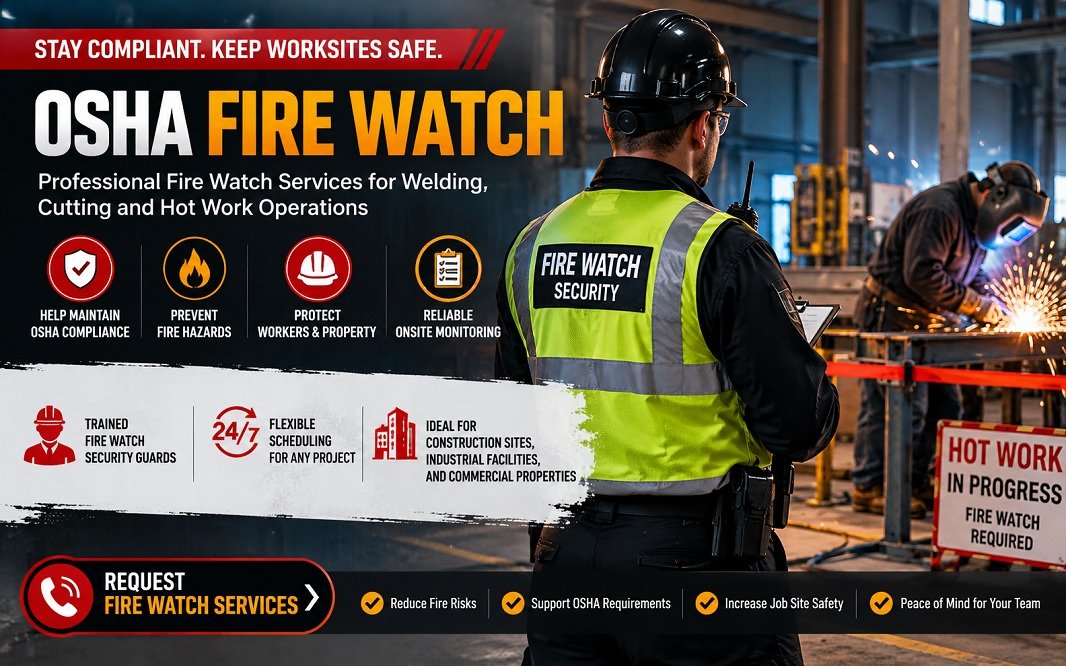
Hot work includes activities such as welding, cutting, brazing, and grinding that can produce sparks, heat, or other ignition sources. These activities may ignite nearby combustible materials, including packaging, insulation, wood, dust, and debris. Some hazards may exist beyond the immediate work area when sparks travel through openings or reach concealed spaces. Before work begins, supervisors should assess the surroundings, follow applicable permit procedures, remove or protect combustible materials where appropriate, and determine whether a designated fire watch attendant is required.
During the activity, assigned personnel should monitor the work area and surrounding locations identified in the safety plan. They should remain alert to changing conditions, communicate concerns promptly, and follow established emergency procedures if a potential fire hazard develops. Depending on the work and applicable requirements, monitoring may also need to continue after the activity has stopped. Managers should clarify the required observation period before work begins and ensure that personnel understand their responsibilities. Consistent coordination between workers, supervisors, and monitoring staff helps reduce avoidable risks.
Protecting Occupants in Commercial and Public Buildings
Commercial offices, hotels, retail stores, healthcare facilities, and other occupied properties have safety requirements that extend beyond protecting equipment and buildings. Employees, customers, contractors, and visitors may be unfamiliar with emergency exits or evacuation procedures, making clear communication particularly important. If fire protection systems are impaired or maintenance introduces additional hazards, managers should assess the effect on occupants and determine what precautions are necessary. Depending on the circumstances, these may include temporary monitoring, restricted access, additional notifications, or other measures required by the relevant authority.
Occupied buildings also require careful attention to corridors, stairwells, exit doors, and routes used by emergency responders. Monitoring personnel should know the building layout and understand how to communicate with the designated manager when an obstruction or unsafe condition is discovered. They should not assume responsibility for directing an evacuation unless their assigned duties and training include that function. By coordinating coverage with building management and established emergency procedures, businesses can maintain better awareness of safety conditions while minimizing unnecessary disruption to normal operations.
Fire Watch Security Guards for Warehouses and Industrial Facilities
Warehouses and industrial facilities often contain substantial quantities of stored goods, packaging materials, machinery, electrical equipment, and production supplies. These environments can present different fire hazards depending on the materials stored, the processes being performed, and the condition of existing safety systems. Fire watch security guards may be needed when a particular operation, equipment impairment, or maintenance activity requires dedicated observation. The monitoring plan should account for the facility’s layout, storage arrangements, restricted zones, and communication procedures.
Industrial environments may also include changing production schedules, heavy equipment movements, and specialized work areas that require site-specific instructions. Personnel should understand which locations they are authorized to enter and how to report hazards without interfering with essential operations. Managers should provide clear information about alarm systems, emergency contacts, evacuation routes, and relevant workplace restrictions. Coordination between operations teams, maintenance contractors, and fire safety personnel helps ensure that monitoring reflects current conditions. Regular reviews are especially useful when production changes or new equipment introduces additional hazards.
Arranging Overnight and After-Hours Fire Monitoring
Fire hazards can remain present when a business closes for the day, particularly if repairs, construction, or equipment maintenance are still underway. Overnight and weekend monitoring may be necessary when a fire protection impairment or specific work activity requires continued coverage under applicable rules. Business owners should establish whether the assignment needs continuous on-site presence, defined patrols, or another approved arrangement based on the property’s risk assessment. The plan should also explain how emergency notifications will be handled when senior managers are unavailable.
Scheduling arrangements should account for shift changes, breaks, unexpected delays, and the possibility that work may continue beyond the planned completion time. Managers should clarify who is responsible for authorizing extensions and how replacement personnel will receive information about ongoing hazards. Handover procedures should include the condition of monitored areas, unresolved concerns, and any instructions received during the previous shift. Reliable coordination helps prevent gaps in coverage and ensures that personnel remain informed throughout the assignment, including during periods when normal business activity is limited.
Evaluating the Scope and Reliability of On-Site Coverage
Before arranging fire watch services, business owners should identify the areas requiring monitoring, the hazards involved, the expected duration, and the responsibilities assigned to personnel. These details help determine appropriate staffing, patrol arrangements, communication methods, and reporting requirements. Managers should also consider whether the property has multiple buildings, restricted access points, unusual operating hours, or changing work locations. Providing accurate information during the planning stage makes it easier to establish a service arrangement that reflects the actual conditions rather than relying on a generic coverage plan.
When evaluating a provider, businesses should ask about personnel training, supervision, scheduling, emergency communication, and recordkeeping. They should also clarify how urgent concerns are escalated and how coverage is maintained if an assignment runs longer than expected. Relevant qualifications, insurance documentation, and familiarity with applicable safety requirements may help inform the selection process. The service agreement should clearly define the work to be performed and any limitations. Reviewing these details in advance supports better coordination between the business, the provider, and the people responsible for maintaining the property’s fire safety arrangements.
Maintaining Records and Meeting Fire Safety Requirements
Fire watch coverage should be organized in accordance with the requirements applicable to the property and the reason monitoring is needed. Depending on local regulations and site procedures, businesses may need to maintain patrol logs, document system impairments, record hot work activities, or notify designated authorities. Managers should verify the relevant obligations with the authority having jurisdiction rather than assume that the same requirements apply everywhere. Clear written procedures help personnel understand what information to record, when to report a problem, and who is responsible for reviewing the documentation.
Records may include the names of assigned personnel, monitoring locations, patrol times, observed hazards, corrective actions, and communications with supervisors. These details can help identify recurring problems and support internal safety reviews. Documentation should be accurate, timely, and consistent with the required reporting format. When the reason for temporary coverage has been resolved, the responsible parties should verify that the relevant fire protection arrangements are operational and complete any required notifications. Ending monitoring through an established procedure helps avoid premature withdrawal of coverage while a safety concern remains unresolved.
Building a Proactive Approach to Temporary Fire Safety Needs
Businesses can prepare for fire watch requirements by establishing clear procedures before an equipment failure or hazardous work activity occurs. A practical plan should identify who assesses the risk, who authorizes additional monitoring, how personnel receive instructions, and how emergency concerns are communicated. Managers should also maintain current contact information for service providers, maintenance teams, and relevant safety representatives. Reviewing these arrangements periodically helps ensure that the business can respond efficiently when temporary coverage becomes necessary.
Effective on-site monitoring works best alongside preventive maintenance, employee training, good housekeeping, and appropriate fire protection equipment. Business owners should encourage workers to report hazards, keep exits accessible, and ensure that contractors understand the precautions required for their activities. When a new project begins or building operations change, the fire risk assessment should be reviewed to determine whether existing controls remain suitable. By combining advance planning with qualified personnel and clear reporting procedures, businesses can respond more effectively to temporary fire risks while protecting people, property, and operational continuity.

